
Our patron
Stefan Wasiak
(1904–1982)
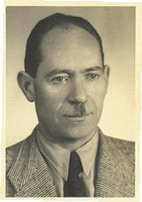 He was one of those musicians and teachers of whom it can truly be said that they never die, because they live on in their pupils. His calling was to develop not only his students’ hands and voices, but above all their character, hearts and minds.
He received a thorough musical education at the Warsaw Conservatoire, graduating as a violinist in Wacław Kochański’s class in 1932 and from the teacher training department in 1928. After several years teaching in general schools in and around Warsaw, the Ministry of Religious Affairs and Public Education sent him to the Free City of Gdańsk. There he taught violin at the Polish Conservatoire and conducted a choir of Polish schoolchildren. He also performed in concerts and carried out community work for Macierz Szkolna and the Union of Poles. Promoting Polish culture in Gdańsk at that time brought considerable dangers. Wasiak saw this work not only as an artistic and educational mission but also as his duty as a Pole and patriot, which he fulfilled with dedication and responsibility.
Narrowly escaping arrest, he left the Free City of Gdańsk and settled at 13 Owocowa Street in Pruszków, near Warsaw. He taught arithmetic, geometry, drawing and singing at a primary school. His singing lessons included patriotic songs, and as a form teacher he sought to foster national pride and principles worthy of a Polish citizen.
After school, he gave instrumental lessons at home, mainly on string instruments but also on piano and accordion. Together with musicians he knew and his more advanced pupils, he formed a string orchestra that performed under his direction at Saint Casimir’s parish church in Pruszków.
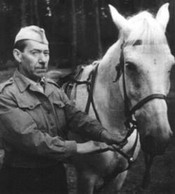
It later emerged that these educational and musical activities also provided cover for his underground service in the Home Army: Pruszków District VI of the Warsaw Home Army’s Seventh Circuit, ‘Obroża’. After the liberation of Pruszków, he immediately organised an interschool choir. At the 3 May celebrations in 1945, when the holiday was still observed, it performed his arrangements of three patriotic songs: ‘Witaj majowa jutrzenko’, ‘Jedzie, jedzie na Kasztance’ and ‘Hej dziewczyno, hej niebogo’.
After the war, he resumed his teaching and artistic work alongside extensive organisational and community activities. He devoted considerable energy to establishing the Musicians’ Trade Union, conducted its orchestra and helped organise music education. From 1950 to 1954, he worked at the Ministry of Culture and Art, first as an inspector and then as a department head. He chaired specialist committees and developed the structure and edited around 70 curricula for first- and second-level music schools.
 Between 1952 and 1957, he established and led the Warsaw Philharmonic Children’s Choir, remembered as one of the finest ensembles of its kind. From 1953 to 1957, he also taught violin at the Military Bandmasters’ College attached to the State Higher School of Music in Warsaw. In 1957, he moved into teacher training, and from 1961 to 1968 headed the music education department of Warsaw’s Second Teacher Training College. He also worked extensively for the Polish Teachers’ Union. In 1950, he organised a national gathering of teachers’ choirs, conducted a teachers’ choir in Warsaw and founded a teachers’ orchestra. He organised and taught courses for conductors of teachers’ choirs and instrumental ensembles, and lectured on numerous courses run by the Ministry of Education, education authorities and national and regional branches of the union.
His many educational publications form another important part of his legacy. They included music education textbooks for general schools, teachers’ guides, Metodyka wychowania muzycznego (Methods of Music Education), a violin textbook for teacher training institutions and a collection of choral songs for secondary schools. He also created teaching aids and dozens of curricula for schools at different levels under the Ministry of Education.
Stefan Wasiak was an exceptional individual who drew devoted students and friends around him. Alongside music, his other great passion was the history of Poland. His deep knowledge earned the respect of professional historians. In his vivid lectures, he linked the history of Polish culture with the country’s wider history, inspiring both interest and patriotic feeling.
Demanding of himself and others, he brought boundless energy, enthusiasm, warmth and passion to every undertaking. To young people, he was more than a music teacher and educator. Many of his pupils remember him as a true spiritual guide.